NCERT Exemplar Solutions
Class 10 - Mathematics - CHAPTER 1: Real Numbers - Exercise 1.1 - Multiple Choice QuestionsQuestion 7
Class 10 - Mathematics - CHAPTER 1: Real Numbers - Exercise 1.1 - Multiple Choice Questions
Question. 7
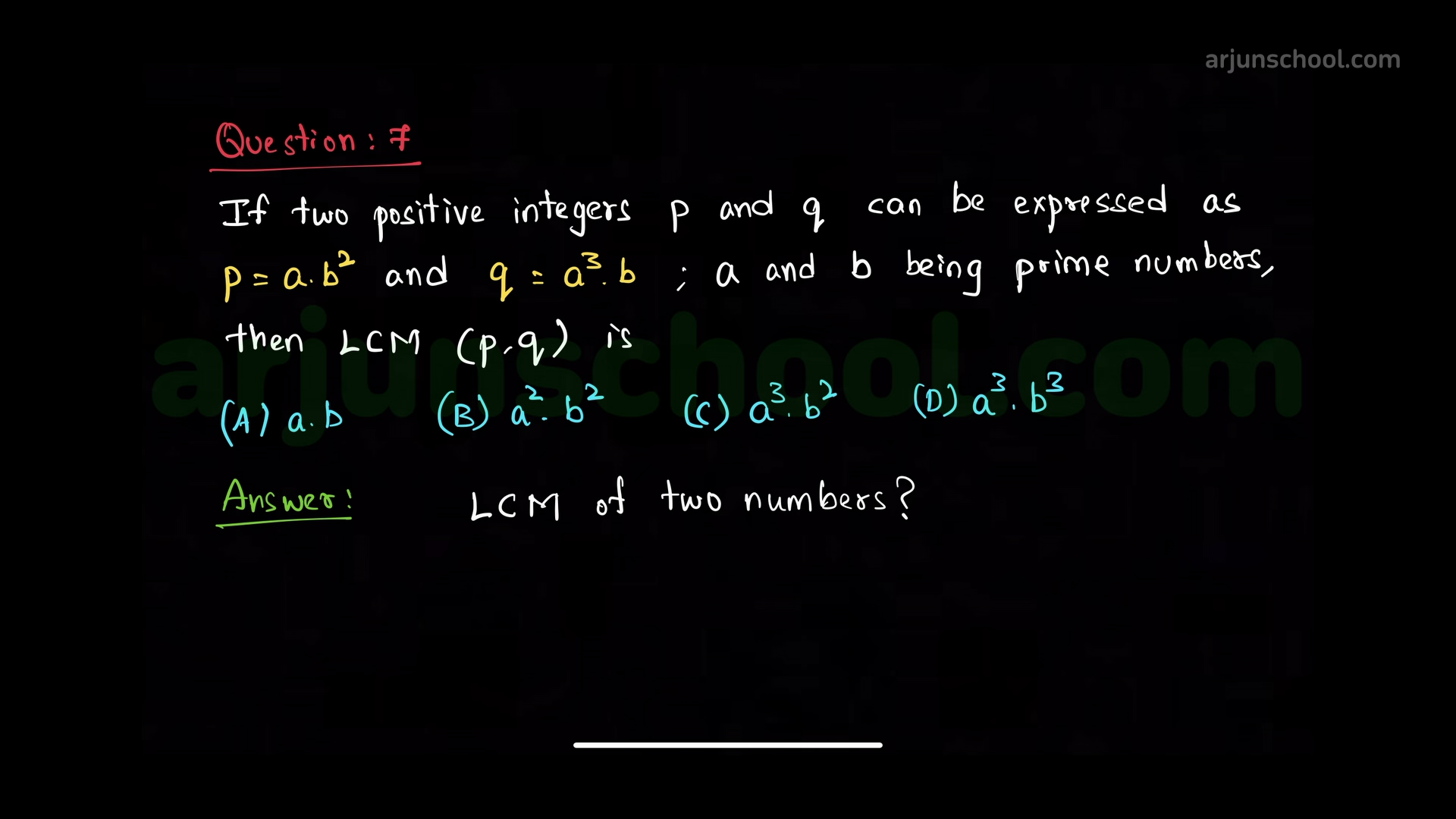
If two positive integers p and q can be expressed as \(p = ab^2\) and \(q = a^3b\); \(a, b\) being prime numbers, then \(LCM(p, q)\) is
(A)
\(ab\)
(B)
\(a^2b^2\)
(C)
\(a^3b^2\)
(D)
\(a^3b^3\)
Handwritten Notes
Video Explanation:
Detailed Answer with Explanation:
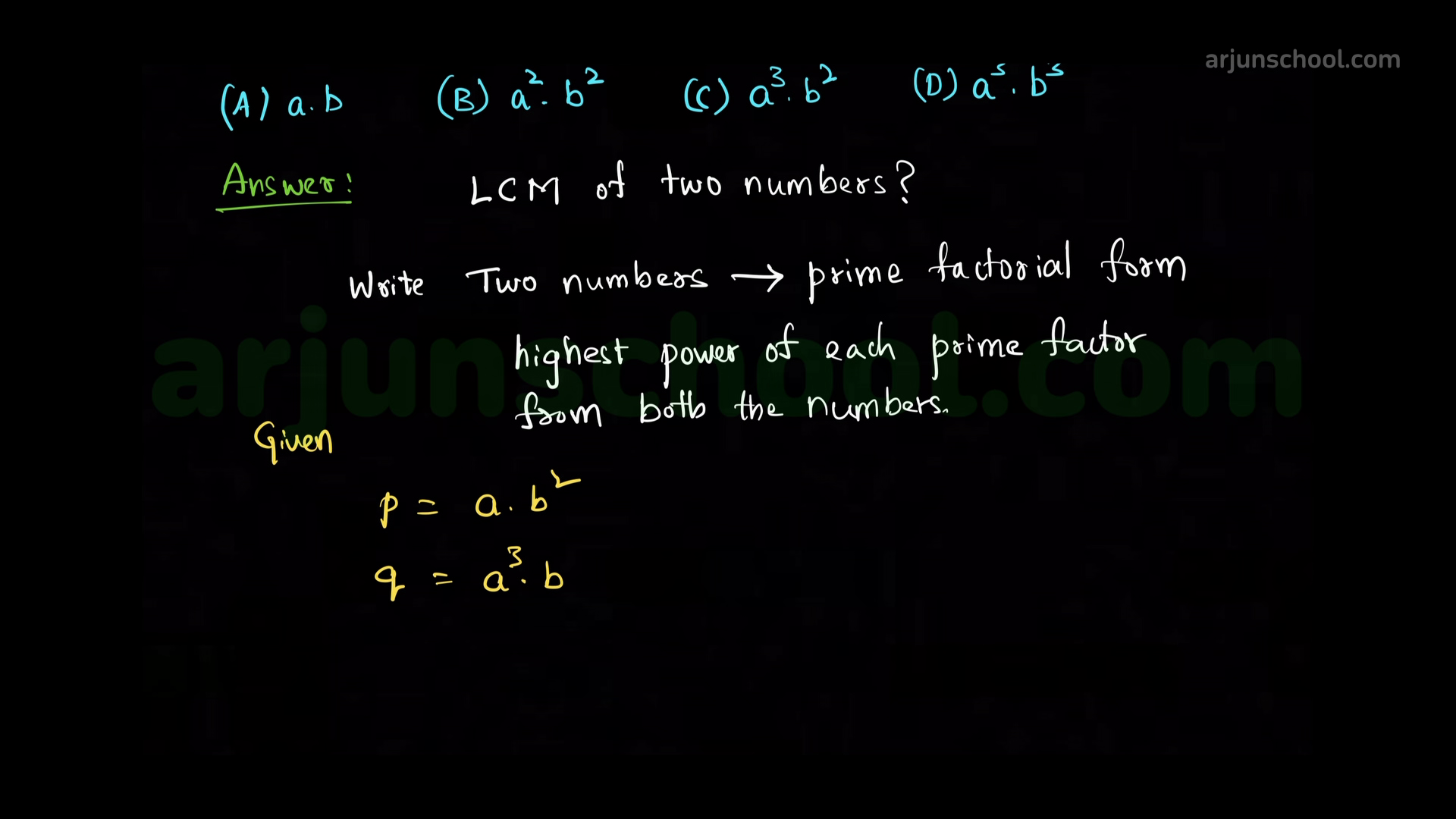
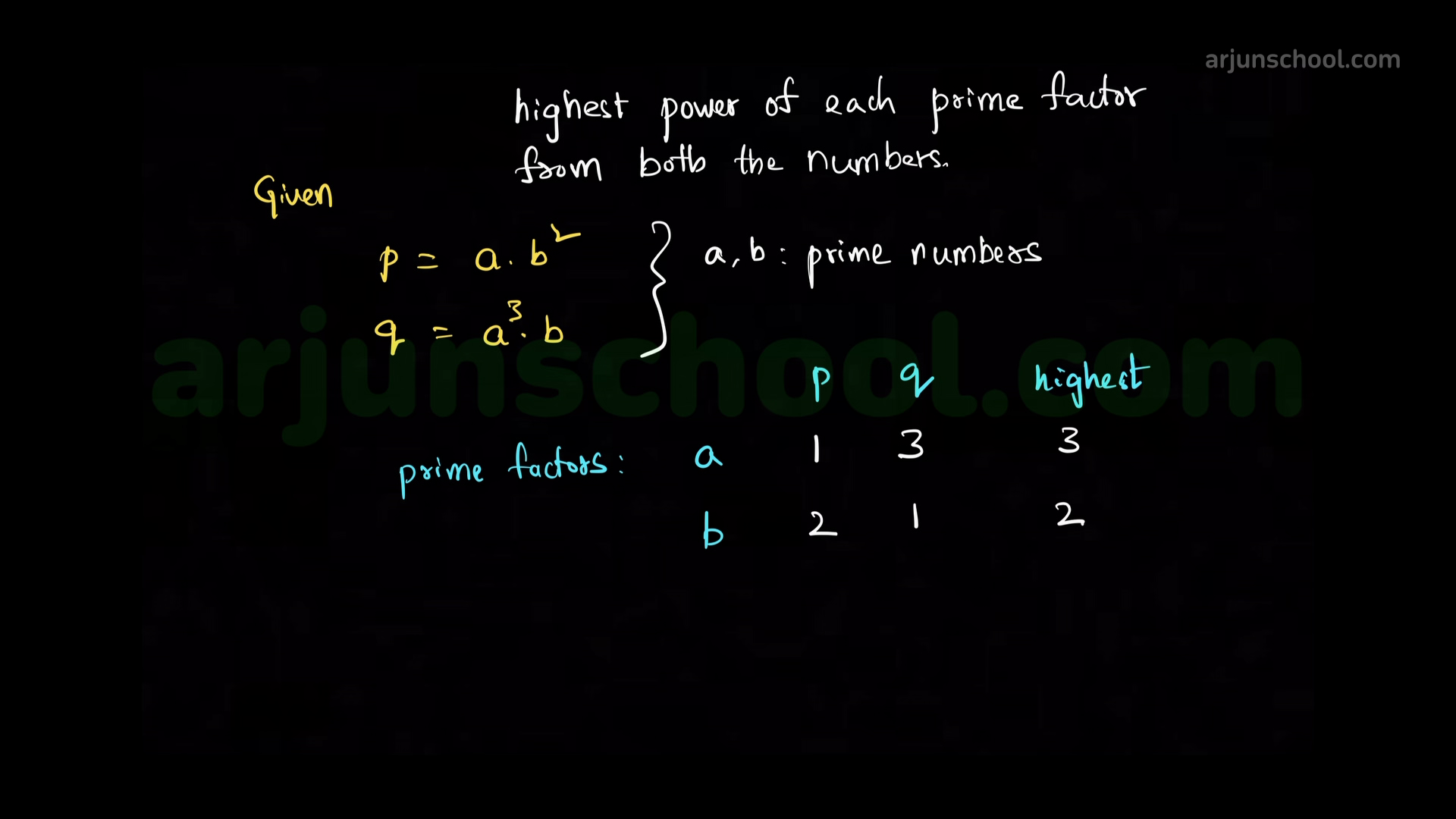
The LCM is found by taking the highest power of each prime factor from both numbers.
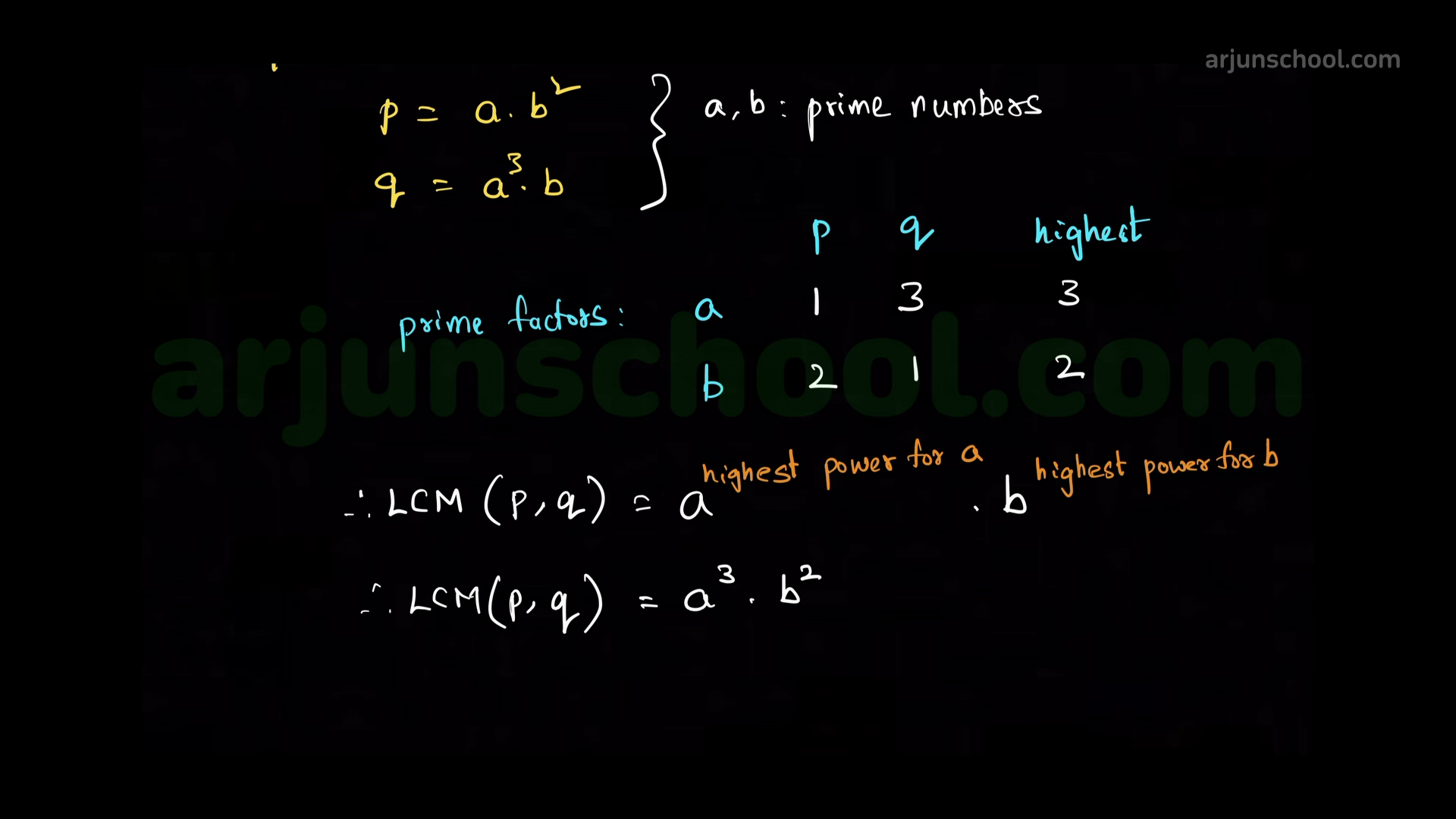
For \(a\), the powers are \(1\) (in p) and \(3\) (in q). The maximum is \(3\).
For \(b\), the powers are \(2\) (in p) and \(1\) (in q). The maximum is \(2\).
So, the LCM is \(a^3b^2\).